
CDMO
A new standard of medicine, opened by regenerative science
Stem cell technology is at the center of next-generation biotech and regenerative medicine. Grounded in scientific evidence and research data, we open safer and more reliable possibilities for stem cell therapy.
What Are Stem Cells?
Stem cells are early-stage cells that have not yet committed to a specific function, distinguished at once by self-renewal—the ability to proliferate on their own—and the capacity to become many different cell types. Building on these traits, they play a pivotal role across broad areas of bio research: tissue damage recovery, regenerative medicine, and cell therapeutic development.
Three Key Characteristics
Self-renewal
Through repeated cell division, cells with identical characteristics are continuously produced.
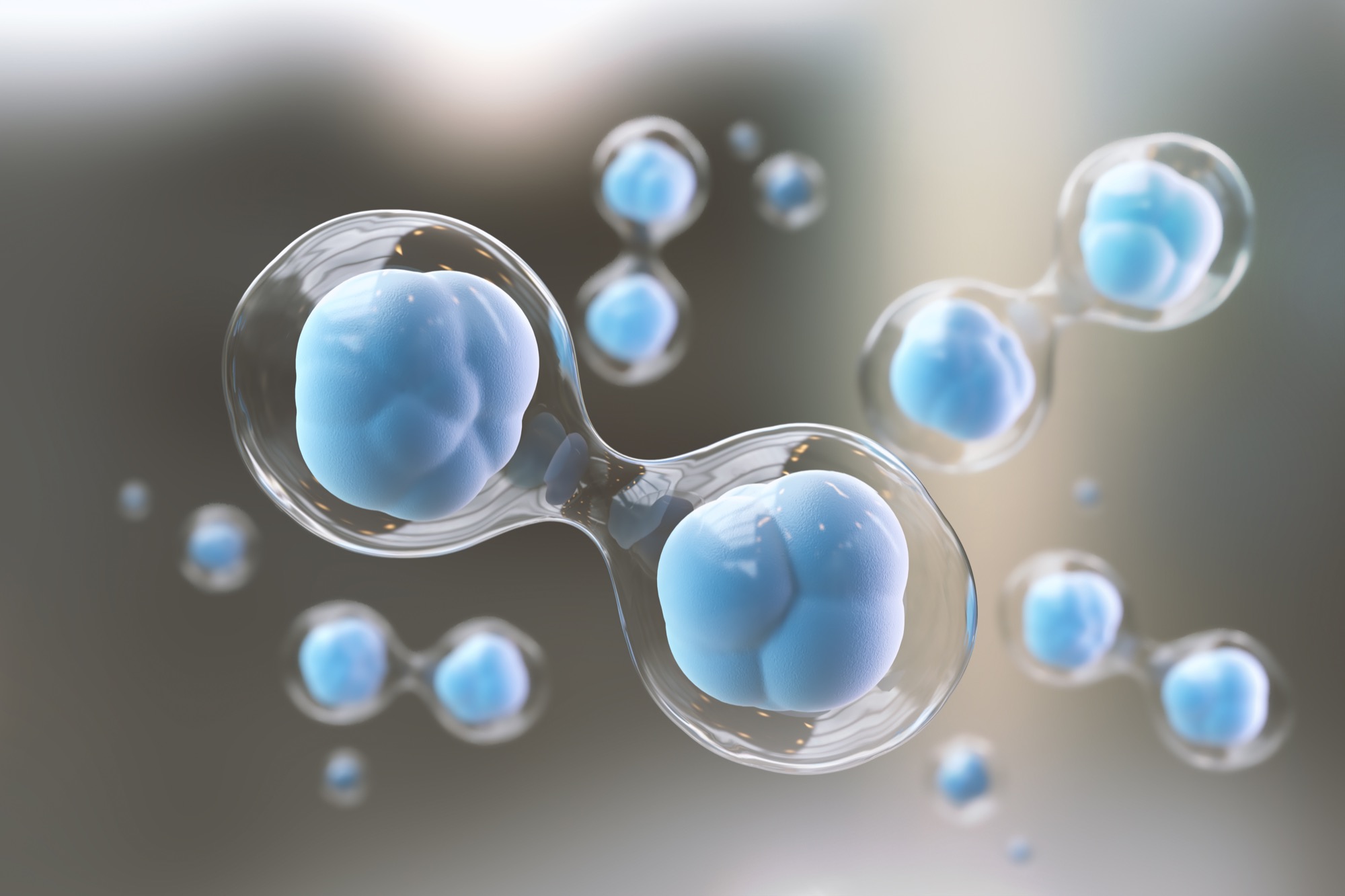
Multipotency · Differentiation
Differentiates into various cell types such as muscle, cartilage, nerve, and blood for use in tissue regeneration.
Homing Effect
They recognize and respond to damaged or inflamed areas, creating an environment for healing.
Mechanism of Action
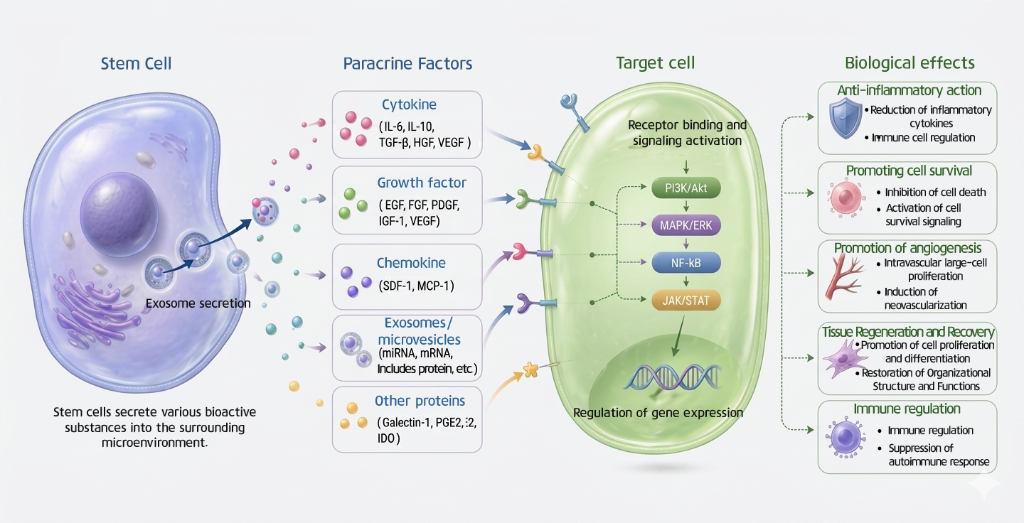
Stem cells go beyond simple cell replacement—they actively exchange signals with surrounding tissue to aid recovery. Key substances secreted by stem cells—growth factors, cytokines, chemokines, and exosomes—act on surrounding tissue to promote damaged-cell recovery, relieve inflammation, and drive vessel formation and improved tissue-regeneration environments. This is known as the paracrine effect.
“Stem cells are the most powerful signaling cells in our body.”
Immune cells: the most powerful defense system in our body
Immune cells are the body's natural defense system that protects us from external viruses, bacteria, and cancer cells. We research next-generation immunotherapies that strengthen and harness immune cell function on the basis of scientific evidence.
What Are Immune Cells?
Immune cells recognize and eliminate pathogens, foreign substances, and abnormal cells in the body. Various cell types across the innate and adaptive immune systems work in concert, and harvesting, expanding, and activating them outside the body for therapeutic use is the essence of immune cell therapy.
Key Immune Cells
NK Cells · Natural Killer Cell
Natural killer cells that selectively recognize and directly eliminate cancer cells and virus-infected cells—reacting rapidly without a separate antigen-recognition step.
T Cells · T Cell
Core cells of adaptive immunity that remember specific antigens and precisely attack target cells, performing diverse functions from cytotoxic to regulatory T cells.
Dendritic Cells · Dendritic Cell
They act as the conductor—recognizing antigens and handing them to T cells to orchestrate the immune response. An essential cell that serves as the starting point of immune activation.
Mechanism of Action
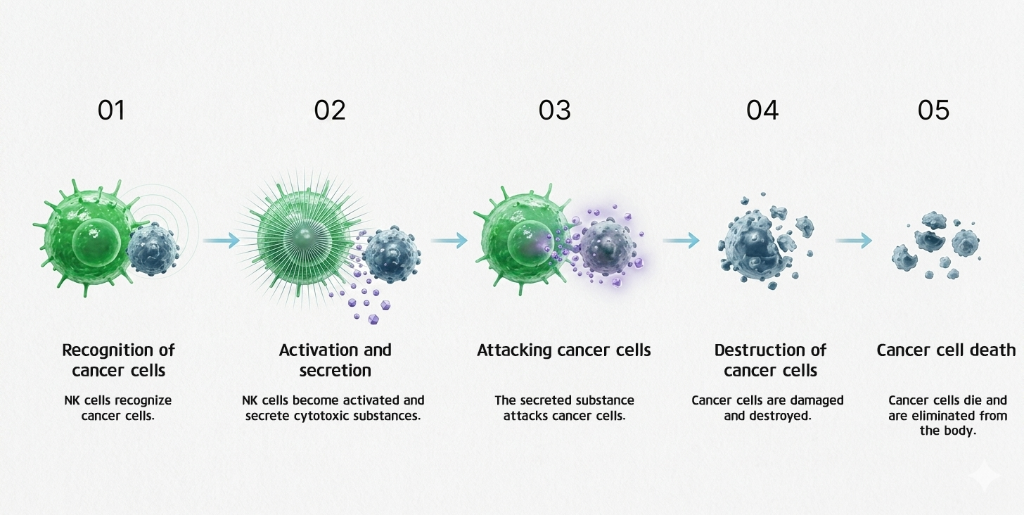
Immune cell therapy works by collecting immune cells from the patient's own blood, activating and expanding them outside the body, and administering them back into the body.
“Strengthening your own immune cells so your body fights back on its own.”
The purest stem cells, held at the moment life begins
Umbilical cord-derived stem cells are mesenchymal stem cells harvested from the umbilical cord at birth—core resources for next-generation regenerative medicine with high proliferative and differentiation capacity. Collected in a single opportunity, their value and potential are truly exceptional.
What Are Umbilical Cord-Derived Stem Cells?
Umbilical cord-derived stem cells (MSC) are mesenchymal stem cells isolated from umbilical cord tissue immediately after birth. Compared with adult-derived stem cells they show higher cell activity and faster proliferation, and being harvested from tissue discarded after birth they are an ethical, safe cell resource that places no burden on mother or newborn.
Key Characteristics
High Cell Potency
Compared with adult-derived stem cells, they offer superior proliferative and differentiation capacity while maintaining a younger, more active cell state.
Low Immune Rejection
Immunologically immature, they carry a relatively low risk of rejection even in allogeneic transplantation, broadening their range of application.
Non-invasive, Ethical Harvesting
Harvested from umbilical cord tissue discarded after birth, they are safe for both mother and newborn and carry no ethical burden.
Mechanism of Action
Umbilical cord-derived stem cells migrate to damaged tissue sites and create an environment for recovery through diverse biological signals.
“The vitality held within the umbilical cord helps damaged tissue recover.”
Research Trends
Stem Cells
- (1)Ko, J. Z., Johnson, S., & Dave, M. (2021). Efficacy and safety of mesenchymal stem/stromal cell therapy for inflammatory bowel diseases: An up-to-date systematic review. Biomolecules, 11(1), 82.https://doi.org/10.3390/biom11010082
- (2)Klay, D., Platenburg, M. G. J. P., van Rijswijk, R. H. N. A. J., Grutters, J. C., & van Moorsel, C. H. M. (2020). ABCA3 mutations in adult pulmonary fibrosis patients: A case series and review of literature. Current Opinion in Pulmonary Medicine, 26(3), 293–301.https://doi.org/10.1097/MCP.0000000000000680
- (3)Harrell, C. R., Sadikot, R., Pascual, J., Fellabaum, C., Jankovic, M. G., & et al. (2019). Mesenchymal stem cell-based therapy of inflammatory lung diseases: Current understanding and future perspectives. Stem Cells International, 2019, 4236973.https://doi.org/10.1155/2019/4236973
- (4)Glassberg, M. K., Minkiewicz, J., Toonkel, R. L., Simonet, E. S., Rubio, G. A., & et al. (2017). Allogeneic human mesenchymal stem cells in patients with idiopathic pulmonary fibrosis via intravenous delivery (AETHER): A phase I safety clinical trial. Chest, 151(5), 971–981.https://doi.org/10.1016/j.chest.2016.10.061
- (5)Alazzouni, A. S., Fathalla, A. S., Gabri, M. S., Dkhil, M. A., & Hassan, B. N. (2020). Role of bone marrow derived-mesenchymal stem cells against gastric ulceration: Histological, immunohistochemical and ultrastructural study. Saudi Journal of Biological Sciences, 27(12), 3456–3464.https://doi.org/10.1016/j.sjbs.2020.09.030
Immune Cells
- (1)Mace, E. M. (2023). Human natural killer cells: Form, function, and development. Journal of Allergy and Clinical Immunology, 151(2), 371–385.https://doi.org/10.1016/j.jaci.2022.09.022
- (2)Chen, S., Zhu, H., & Jounaidi, Y. (2024). Comprehensive snapshots of natural killer cells functions, signaling, molecular mechanisms and clinical utilization. Signal Transduction and Targeted Therapy, 9(1), 302.https://doi.org/10.1038/s41392-024-02005-w
- (3)Page, A., Chuvin, N., Valladeau-Guilemond, J., & Depil, S. (2024). Development of NK cell-based cancer immunotherapies through receptor engineering. Cellular & Molecular Immunology, 21(4), 315–331.https://doi.org/10.1038/s41423-024-01145-x
- (4)Hu, W., Wang, G., Huang, D., Sui, M., & Xu, Y. (2019). Cancer immunotherapy based on natural killer cells: Current progress and new opportunities. Frontiers in Immunology, 10, 1205.https://doi.org/10.3389/fimmu.2019.01205
- (5)Ma, S., Yu, J., & Caligiuri, M. A. (2025). Natural killer cell–based immunotherapy for cancer. The Journal of Immunology, 214(7), 1444–1456.https://doi.org/10.1093/jimmun/vkaf036